Why Are Cowboys So Fucking Hot?
Ashu Bazuzi #36.3
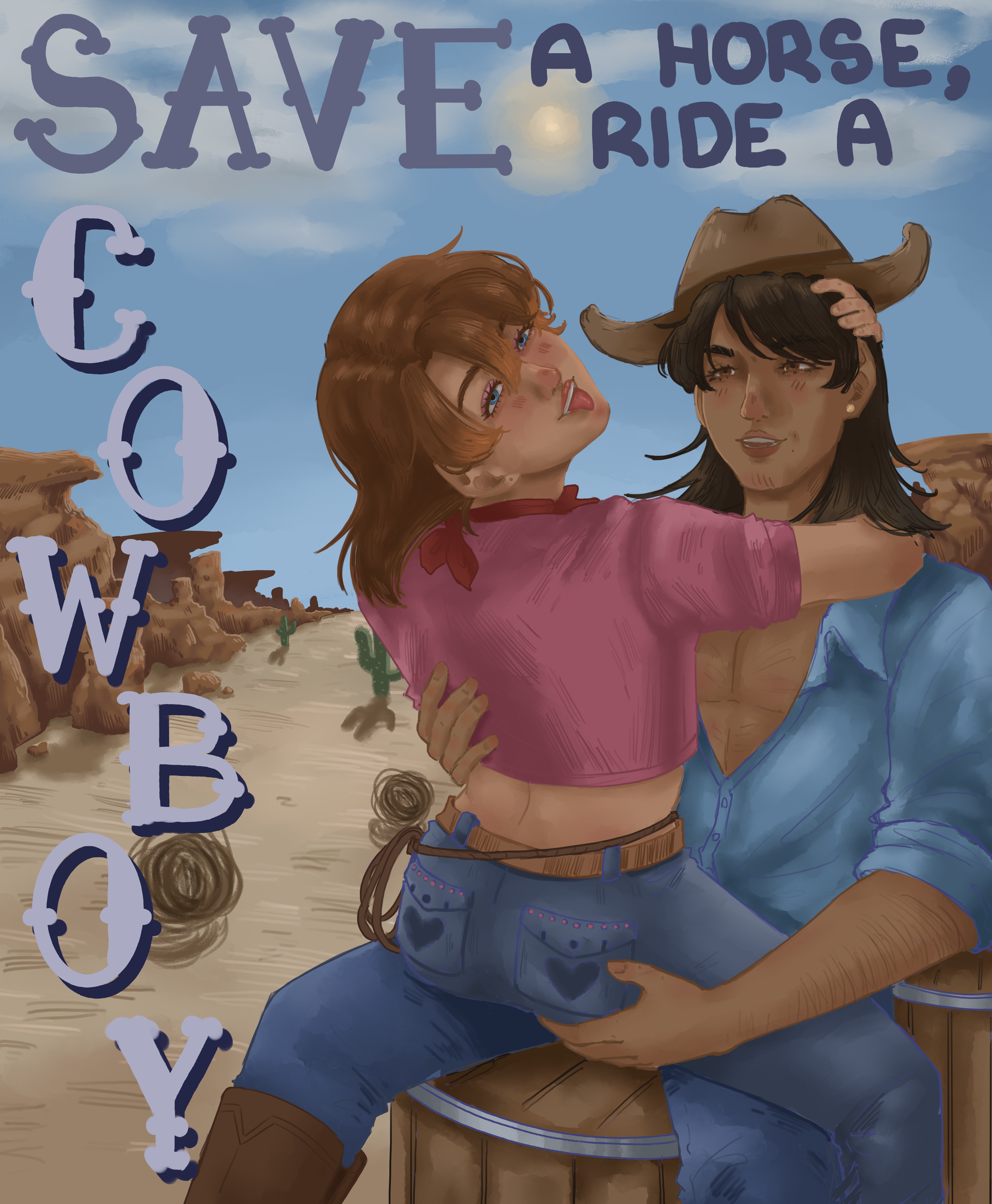
Art by Roman Cronus
Clothes and fashion are important to flesh because they frame the ways we do and don’t see it. They are the camera angles from which we view our bodies. The cowboy fashion style is one that carries fantasies with it, both sexual fantasies and fantasies of character. The cowboy mythos has always been as much about the clothes as the bodies sweating under the desert sun beneath them. A cowboy is tight jeans clinging to every curve, assless chaps to help with riding, and a spurred boots that make you jealous of the horse.
Cowboy fashion is also often an excuse to reveal flesh, even it would be very impractical if you were actually herding cows or wrestling steer. Hot pants short enough for a bit of ass to spill out means risking sunburn on those toned legs unless you use sunscreen (here, I’ll apply it for you). A belt hanging lose to reveal pelvic bones basically nullifies the entire point of a belt since you still have to keep a hand on your pants, ala Lil Nas X during his SNL performance of Montero where his pants ripped and it looked like he was holding his cock the whole time (not an unwelcome sight). Speaking of, that performance is hot as hell. Nas carries himself with so much cowboy swagger even leaving his Old Town Road era and into this devilish leather outfit that in my mind he transports leather into the Wild West. I’m changing the definition of cowboy to include leather just for that.
On the topic of changing definitions of “cowboy,” some questionable inclusions made the cut into the collage, in fact all of them are questionable. The Kentucky Gentlemen are, as their name suggests, far from cowboy country. They’re only regular country. The Wild West is basically irrelevant here actually, probably because it’s not so wild anymore. Lil Nas X is from Atlanta, Orville Peck is South African, Pete Conlan is a New Yorker, and Amelio Roblez Avila was a Mexican Revolutionary. Avila is interesting because he’s the only real historical figure on here, but he’s still not an actual cowpoke. But there’s something impeccably cowboy about this trans man commander who’d threaten people with a gun if they misgendered him, who became an expert marksman and rider as a young man, perhaps before he even knew he was a man. He simply can’t be excluded; he has too much big dick energy, he’s serving too much cunt.
Perhaps my attraction to the cowboy comes from Avila’s capability and bravery. As a child I spent a long time feeling useless and powerless. The outside world seemed scary and difficult, and I felt I lacked many of the skills I needed to survive it. At the start of my teen years, I decided to change that. Since then I’ve been doing, to quote Tenet, cowboy shit. I started trying difficult, foreign feeling things for the experience and the pleasure of knowing I have the chutzpah to step up to the plate. I’ve snuck out of the house and bused eight hours to buy a jacket, I’ve learned to cook, I’ve gone to school. In Avila and other cowboys I see both the kind of person I respect and the kind of person I want to be. I face the classic queer conundrum: Do I want to be them or do I want to fuck them? Like every either/or choice in my bisexual life, I say hell yes.
The fantasy of the cowboy is based on the grit actual cowboys would have needed as cattle herders, though perhaps exaggerated by Buffalo Bill and Hollywood since. I’m not herding cows, but I need as much grit as any other college student and burgeoning adult. I’ve been working on a drag king persona in my head, a cowpoke named Futch Cassidy. They’re very sexualized, and the gimmick is that they switch between feminine and masculine body language on a whim. I’ve never done any kind of drag before, so it will be a leap if I ever try it, another leap to imagine that my flesh could be someone’s fantasy, and a third to present masculinity and trust that people will follow me through femininity and back. It’s going to take a lot of bravery and grit and will to try, but I think I can do it.
Buuuuuuuuuut
I can’t go on about cowboys without acknowledging the racism in the mythos. First off, many historical cowboys were Black, which is important for two reasons. First, the “boy” in cowboy is then from the infantilization of Black men, rooting back to slavery. Second, a settler like myself wearing cowboy boots could be cultural appropriation. Cowboy fashion is also closely linked with Indigenous and Mexican culture. Another issue is that cowboys are frontiersmen, seen as pushing out to the “Wild” West. This story completely ignores the Indigenous people that had been stewarding and caretaking the supposedly untamed land since time immemorial. In the Pacific Northwest, settlers are still attached to the idea of pristine, untouched nature, and it pervades our self-image. Think about that next time you go hiking. Westerns either bathe in the violence of colonialism while demonizing Native Americans with Cowboys vs Indians tropes, or just ignore Native peoples entirely. Thus Native Americans in Westerns are either biologically eliminated or historically eliminated. The grit and capability too is just as much about providing for yourself and being free as it is about violence. It’s the strength to genocide Native Americans and to extract their land. The violence of land extraction is baked into the language of the mythos. The land is called “wild” and “untamed,” and cowboys are there to break, master, and enslave it.
There is a very real argument that a white man in a cowboy getup is a hate symbol. John Hamm’s character on the newest season of Fargo is an excellent deconstruction of this phenomenon, the cowboy subverted as a patriarchal white supremacist. That said, “subversion” is still mostly the right word. Actual cowboy culture was not only Black, but Queer. Part of why so many Black men went west and became cowboys was to escape racism in the east, and Queer men similarly found sanctuary here. While I’ll need to keep wrestling with these ideas, cowboys remain a symbol of courage, and we need courage. Oh, and hot people. Hot people make everything better.
- Ashu Bazuzi
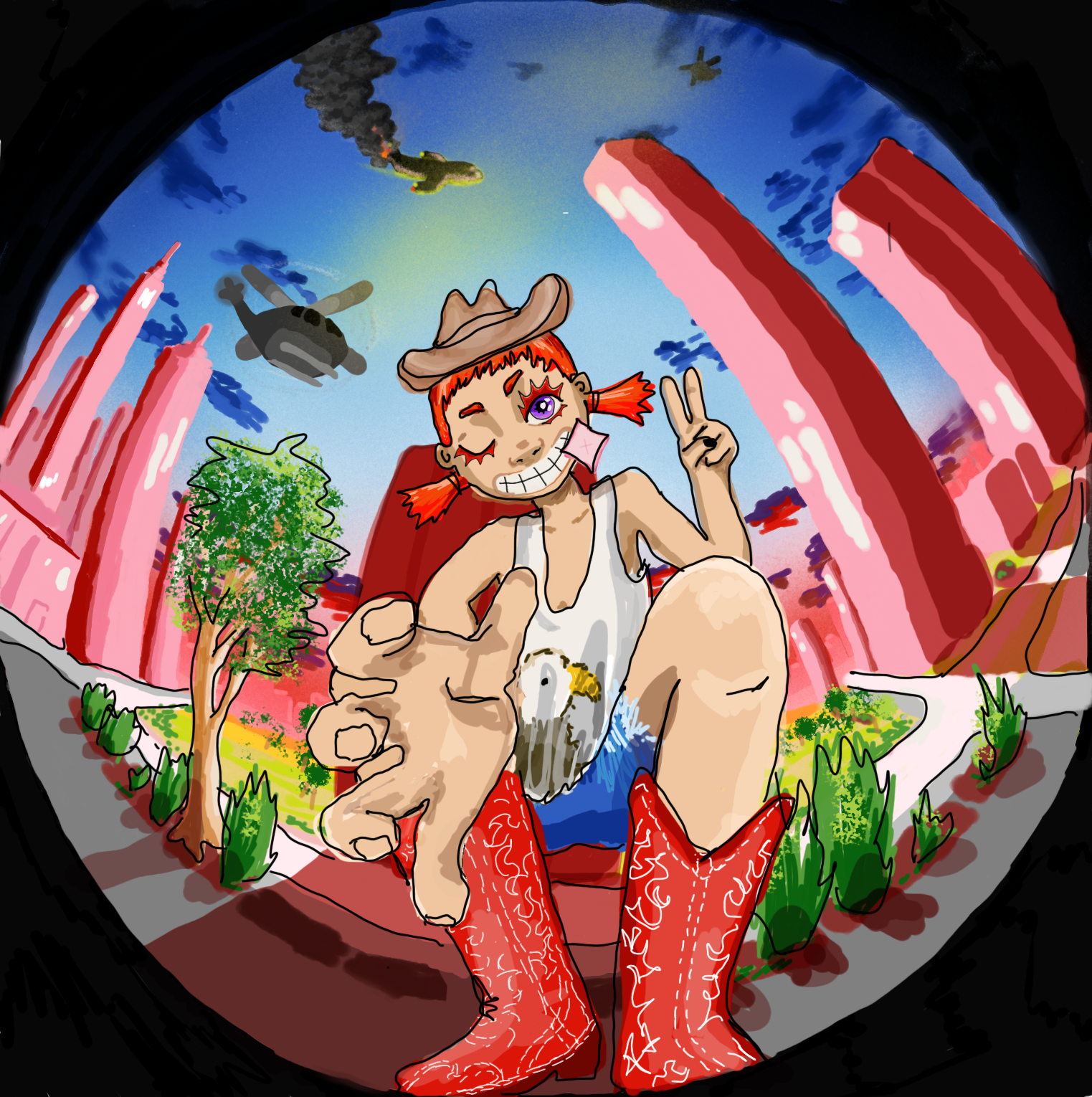
Art by caarrp